
Application of Circular Bare Terminals
A Round Bare Terminal is a common electrical connection component used in scenarios where insulation protection for wire ends is not required. Below are its typical applications and key considerations:
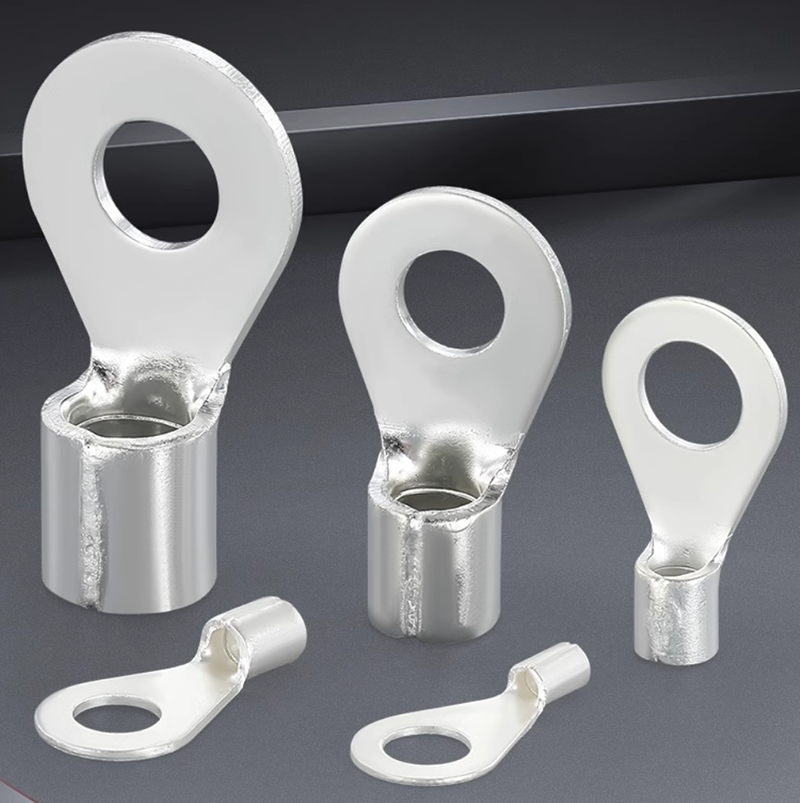
1. Common Application Scenarios
1.Internal Wiring of Electronic Devices
- Used for direct welding or crimping between PCBs and wires (e.g., sensors, relays, or small electronic modules for power/signal connections).
2.Automotive Electrical Systems
- Temporarily connects or repairs automotive wiring harnesses; requires additional insulation (e.g., heat shrink tubing or) to prevent short circuits or wear.
3.Industrial Equipment Wiring
- Connects large-section conductors (e.g., copper bars/aluminum bars) in control cabinets or distribution boxes, commonly used for power input or grounding.
4.Appliance and Lighting Installation
- Internal wiring terminals in lamps, sockets/switches for jumper connections (ensure a dry environment).
5.Testing and Prototyping
Quickly builds temporary circuits or prototypes for flexible adjustments during development.
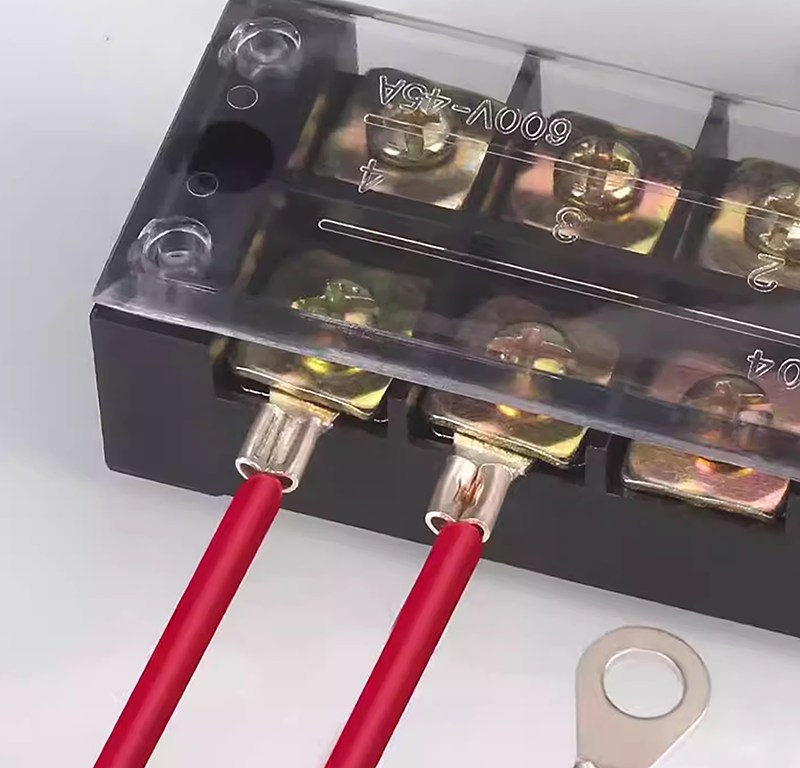
2. Core Advantages
- Low Cost: No insulation materials simplify manufacturing.
- High Conductivity: Direct metal exposure reduces contact resistance.
- Compatibility: Suitable for various wire gauges (matching terminal specifications), supports welding, crimping, or screw fixation.
3. Key Considerations
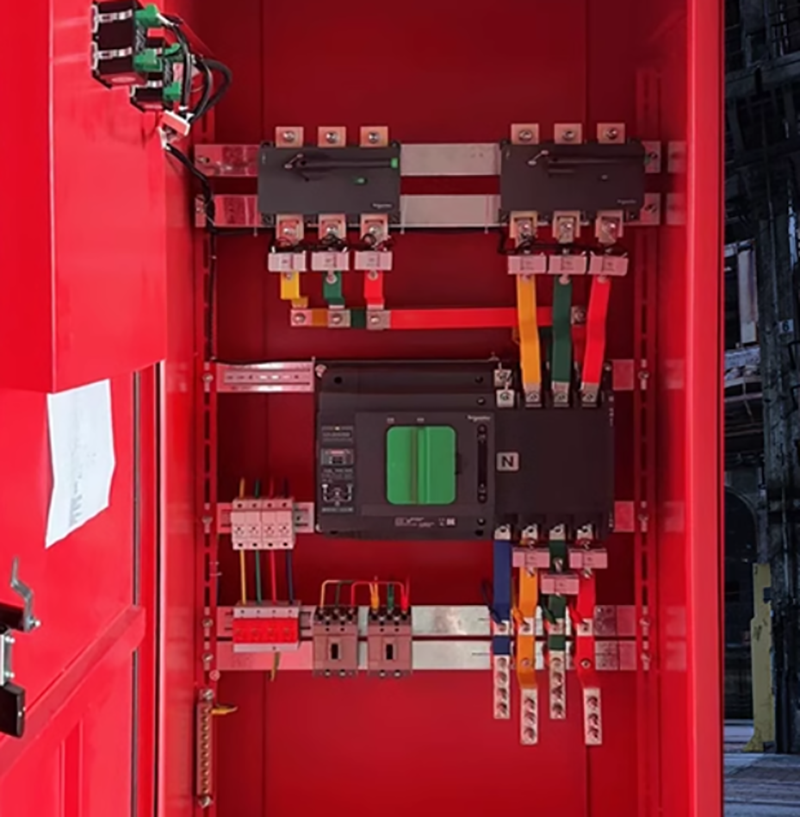
1.Safety Protection
- Ensure exposed parts do not accidentally contact other conductors. Use insulation tape, heat shrink tubing, or terminal guards as needed.
2.Environmental Adaptability
- Avoid use in humid, dusty, or corrosive environments to prevent short circuits or oxidation.
3.Electrical Standards
- Comply with local safety standards (e.g., UL, IEC). For high-current applications, copper alloy terminals may be recommended to minimize temperature rise.
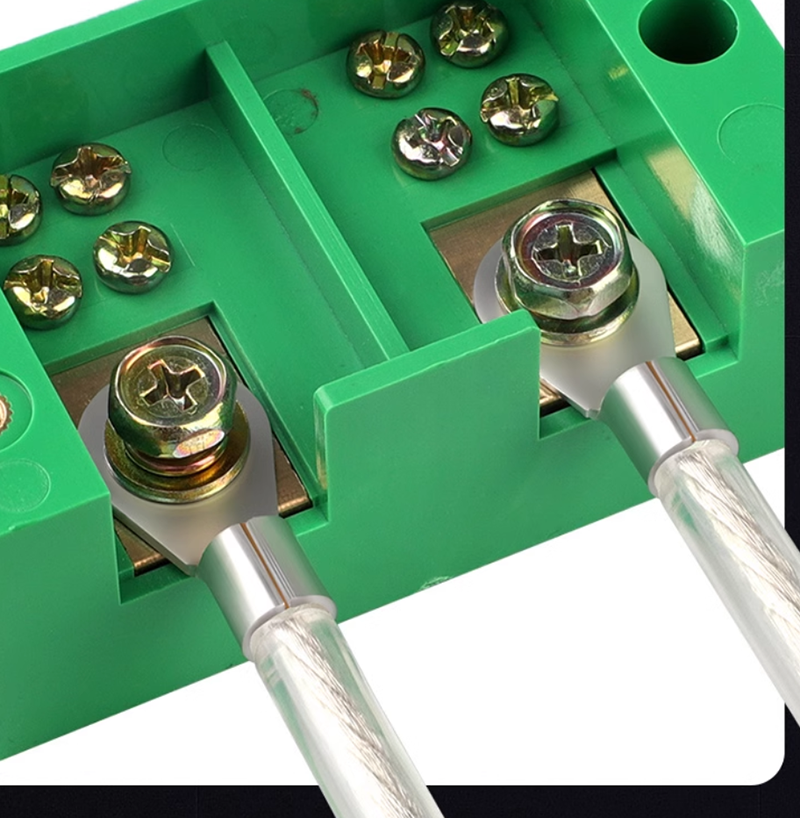
4.Alternative Solutions Comparison
|
Type |
Round Bare Terminal |
Round Bare Terminal |
Crimp Terminal |
|
Application |
Internal wiring, temporary connections |
Insulated environments required |
High-reliability permanent connections |
|
Cost |
Low |
Moderate |
Higher |
|
Maintenance |
Requires additional protection |
Plug-and-play |
Requires crimping tools |
5. Typical Specifications
- Wire Gauge Range: 0.5–6 mm² (dependent on terminal model)
- Materials: Tin-plated copper, pure copper, or stainless steel (for corrosion resistance)
- Connection Methods: Screw compression, spring clamping, or welding
If you need specific selection advice, please provide details such as application environment (voltage level, wire gauge, etc.) for further analysis.
Post time: Feb-27-2025


